
"Zhukula Village"
200 article(s) found

How is the quality of Yunnan coffee? can Yunnan learn from coffee? why is Yunnan coffee so sour?
Professional coffee knowledge exchange more coffee bean information Please follow the coffee workshop (Wechat official account cafe_style) in 1892, French missionary Father Tian Deneng preached in Binchuan, Dali. In order to drink coffee, he planted coffee trees in Zhukula Village, near the church in Binchuan County, and taught local villagers to grow and drink coffee. Up to now, trees still grow in Zhukula Township for more than 90 years.
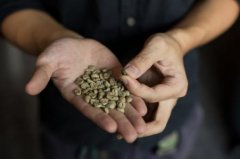
A brief introduction to the treatment method of grinding degree and baking degree of red top coffee iron card fine coffee beans
Iron pickup, also known as the old variety of small-grain coffee, its yield is less, cultivation is difficult, so the price is much higher than ordinary small-grain coffee. Tibica coffee, native to Ethiopia and southeastern Sudan, is the most widely cultivated variety of coffee in the Western Hemisphere. The plant is stronger, but not light-tolerant, and the yield is higher in Hawaii. The top leaf of Tibika is red and copper, which is called red top coffee. Tibica (T

Yunnan small Coffee introduces the characteristics of Yunnan Coffee the taste and flavor of Yunnan boutique coffee
Yunnan small-grain coffee: Yunnan small-grain coffee, Rubiaceae, coffee genus, the planting area is mainly distributed in Lincang, Baoshan, Simao, Xishuangbanna, Dehong and other states. [1] small grains of coffee are native to Ethiopia or Arabian Peninsula. It is cultivated in Fujian, Guangdong, Hainan, Guangxi, Sichuan, Guizhou and Yunnan. The Origin of Yunnan small Coffee: in 1892, French missionary Father Tian

Fragrant Yunnan small Coffee Huaguoshan Coffee grindability characteristics Variety description of producing area
According to reports, in 1892, French missionary Father Tian used coffee fruit to breed the first coffee tree outside the church, and then cultivated more coffee trees and planted them around the church. Since then, the village of Zhukula began to grow coffee, and the village has been surrounded by coffee trees ever since. The two oldest elders in the village, Qi Guanghui and Li Fu
Yunnan small Coffee introduces the characteristics of Yunnan Coffee the taste and flavor of Yunnan boutique coffee
Yunnan small-grain coffee: Yunnan small-grain coffee, Rubiaceae, coffee genus, the planting area is mainly distributed in Lincang, Baoshan, Simao, Xishuangbanna, Dehong and other states. [1] small grains of coffee are native to Ethiopia or Arabian Peninsula. It is cultivated in Fujian, Guangdong, Hainan, Guangxi, Sichuan, Guizhou and Yunnan. The Origin of Yunnan small Coffee: in 1892, French missionary Father Tian

Do you know Yunnan small grains of coffee? Let's get to know some of its development knowledge.
Yunnan small-grain coffee: Yunnan small-grain coffee, Rubiaceae, coffee genus, the planting area is mainly distributed in Lincang, Baoshan, Simao, Xishuangbanna, Dehong and other states. [1] small grains of coffee are native to Ethiopia or Arabian Peninsula. It is cultivated in Fujian, Guangdong, Hainan, Guangxi, Sichuan, Guizhou and Yunnan. The Origin of Yunnan small Coffee: in 1892, French missionary Father Tian

Yunnan small Coffee Iron pickup Coffee Fine Coffee Bean Flavor Taste Manor characteristics of China
According to reports, in 1892, French missionary Father Tian used coffee fruit to breed the first coffee tree outside the church, and then cultivated more coffee trees and planted them around the church. Since then, the village of Zhukula began to grow coffee, and the village has been surrounded by coffee trees ever since. The two oldest elders in the village, Qi Guanghui and Li Fu

The "living fossil" of Chinese coffee waits for a hundred years of "encounter"
In the second pair of coffee shops, guests taste Zhukula coffee in front of the murals in Ha long Bay, Vietnam. Chinanews.com, Dali, April 11 (Miao Chao) more than 100 years ago, French missionaries planted coffee trees in Zhu Kula, a remote mountain village in Binchuan, Yunnan, opening the history of coffee cultivation in China. After a hundred years, Zhu Kula coffee was hidden in boudoir, until Binchuan welcomed a group of Vietnamese returned overseas Chinese. Reporter

The Origin of Yunnan small-grain Coffee
The origin of Yunnan small-grain coffee: in 1892, the French preacher Father Tian succeeded in experimenting with growing coffee in a place called Zhu Kula in Yunnan. To the city of Guzhu Kula, there are still 24 coffee trees with more than 90 years old. Zhu Kula is a mysterious, colorful and natural village, attached to the Zhukula Village Committee, Pingdi Town, Binchuan County, Dali Prefecture, located in the trunk of the Jinsha River.

Where is it suitable for growing coffee in China? which province is the main producing area of Chinese coffee?
Professional coffee knowledge exchange more coffee bean information please follow the coffee workshop (Wechat official account cafe_style) front street-the origin of coffee in China in 1892, French missionary Father Tian used coffee fruit to breed the first coffee tree outside the church, then began to grow coffee in Zhukula Village, Yunnan Province. Up to now, Zhukula Township in Yunnan Province is still growing 9.

General knowledge of Fine Coffee cultivation of small Coffee in Yunnan
The origin of Yunnan small-grain coffee: in 1892, the French preacher Father Tian succeeded in experimenting with growing coffee in a place called Zhu Kula in Yunnan. To the city of Guzhu Kula, there are still 24 coffee trees with more than 90 years old. Zhu Kula is a mysterious, colorful and natural village, attached to the Zhukula Village Committee, Pingdi Town, Binchuan County, Dali Prefecture, located in the trunk of the Jinsha River.

Yunnan Simao Coffee Simao small Grain Coffee Simao Lancang River Coffee
German coffee experts said: Simao, a beautiful place that is not discovered by the world, grows high-quality coffee. In January 2006, the American Special Coffee Association compared Simao Coffee with Colombian Coffee for three consecutive years, with Simao Coffee 88.75% and Colombian Coffee 85.88%. All this shows that first-class coffee is growing in Pu'er city. In Pu'er

Coffee experts from all over the world focus on the protection and inheritance of ancient coffee forests
Professional barista exchanges, please pay attention to coffee workshop (Weixin Official Accounts cafe_style ) The first Yunnan Binchuan Zhukula Coffee Forum was held in Zhukula Village on the 17th. Coffee experts from the United States, France, India and Ethiopia focus on the inheritance and protection of the Jukura coffee forest and coffee culture and intangible cultural heritage, as well as the scientific development of the cultural brand of Jukura coffee. bin

Full-bodied Yunnan small-grain Coffee Huaguoshan Coffee Grinding characteristics Variety flavor description mouth
In recent years, the planting area of small-grain coffee in other producing areas of Yunnan has been expanding, the quality has also made great progress, and the popularity of small-grain coffee has been improved both at home and abroad. After inspecting the coffee planting and primary processing base in Yunnan, international coffee organization tasting experts rated Yunnan coffee as a kind of small seed coffee processed by Colombian wet processing, which is the highest quality coffee in the world.

A brief introduction to the cultivation of slightly fruity tin tin card boutique coffee beans, geographical location, climate and altitude
Yunnan coffee was planted on a large scale in the mid-1950s, with a planting scale of 4000 hectares at one time. By the end of 1997, the planting area of coffee in the province had reached 7800 hectares. At present, the planting area of the province accounts for 70% of the national area, and the output accounts for 83% of the whole country. Yunnan coffee has established the dominant position in China in terms of planting area and coffee bean production. Yunnan coffee should be distinguished by planting.
Yunnan coffee Yunnan small grain coffee Yunnan boutique coffee
Yunnan small-grain coffee in China is a beverage crop with high economic value, which is called the three largest beverages in the world together with cocoa and tea, and its output and consumption ranks first among the three beverages. Coffee is rich in protein, fat, sucrose, starch, glucose, caffeine and other substances, rich aroma and delicious taste. Coffee is a perennial evergreen shrub of the genus Coffee of Rubiaceae or Xiao Qiao.

Introduction to the characteristics of Yunnan Tieka Coffee Flavor Flavor Manor
Typica and Bourbon, two classic high-quality coffee varieties, are the main coffee varieties in Yunnan. In 1991, Katimo Catimor series varieties were introduced from Kenya (with stronger anti-virus ability and higher yield). A variety of Arabian species (also known as small seed species). Because the morphology and habits of the two varieties are similar, the two varieties are mostly mixed. Iron
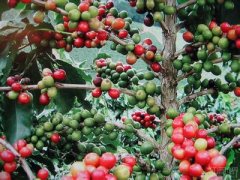
Yunnan Arabica Coffee China Yunnan Coffee
Coffee is a kind of beverage crop with high economic value, which is called the world's three major beverages together with cocoa and tea. Its output and consumption rank first among the three beverages. Because coffee is rich in protein, fat, sucrose and starch, glucose, caffeine and other substances, aroma rich, delicious taste. Coffee is a perennial evergreen shrub or small tree belonging to the genus Coffea of Rubiaceae. There are many kinds of coffee.
Cultivation of small Coffee in Yunnan
Small-grain coffee is suitable for living in mountains with an altitude of 800 to 1800 meters. If the altitude is too high, it will taste sour, and if it is too low, it will taste bitter. Small grains of coffee are mostly planted in dry and hot valleys at an altitude of 1100 meters above sea level, so they are moderately sour, rich and mellow.
Knowledge about Yunnan small grain coffee
Small-grain coffee is suitable for living in mountains with an altitude of 800 to 1800 meters. If the altitude is too high, it will taste sour, and if it is too low, it will taste bitter. Small grains of coffee are mostly planted in dry and hot valleys at an altitude of 1100 meters above sea level, so they are moderately sour, rich and mellow.